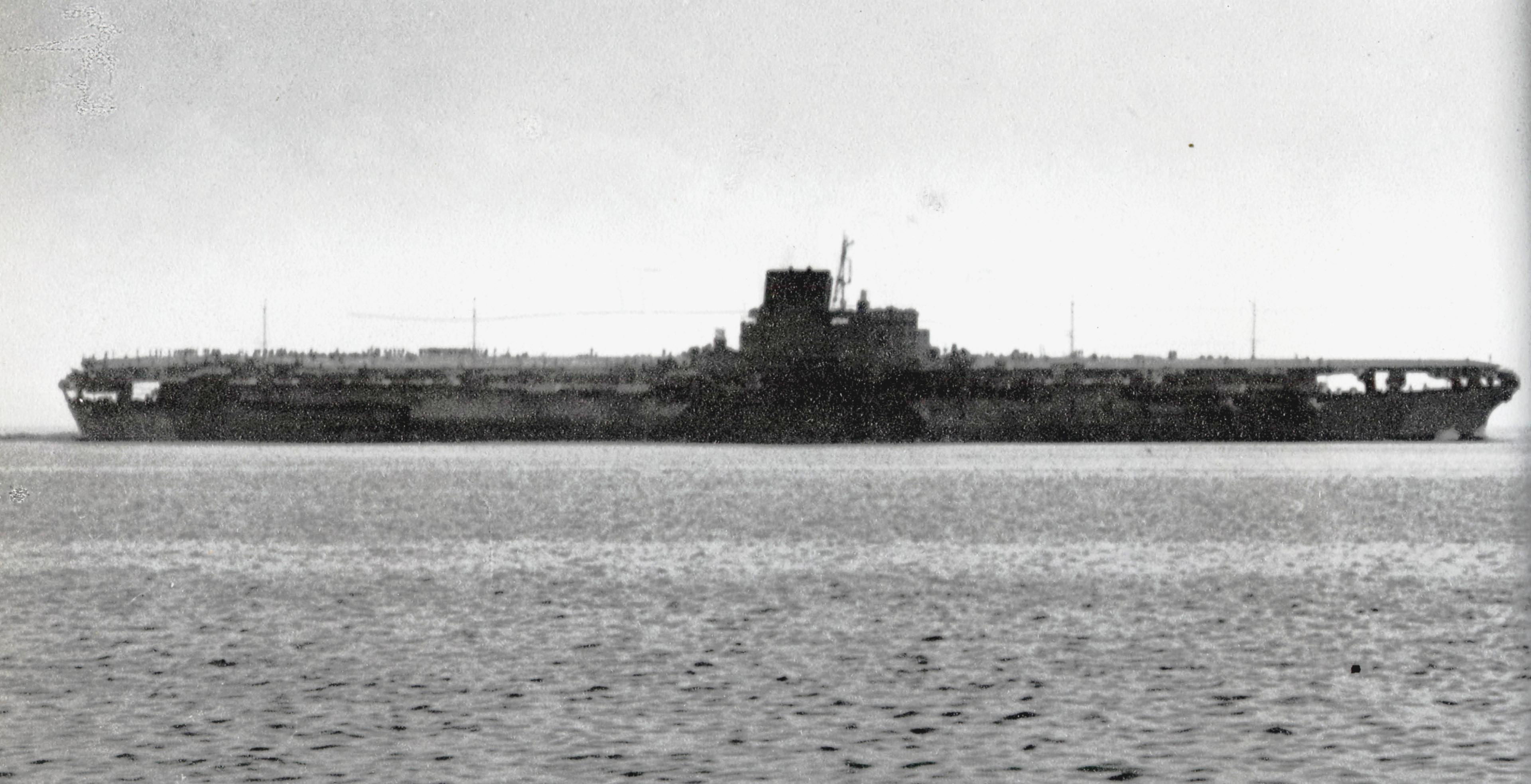
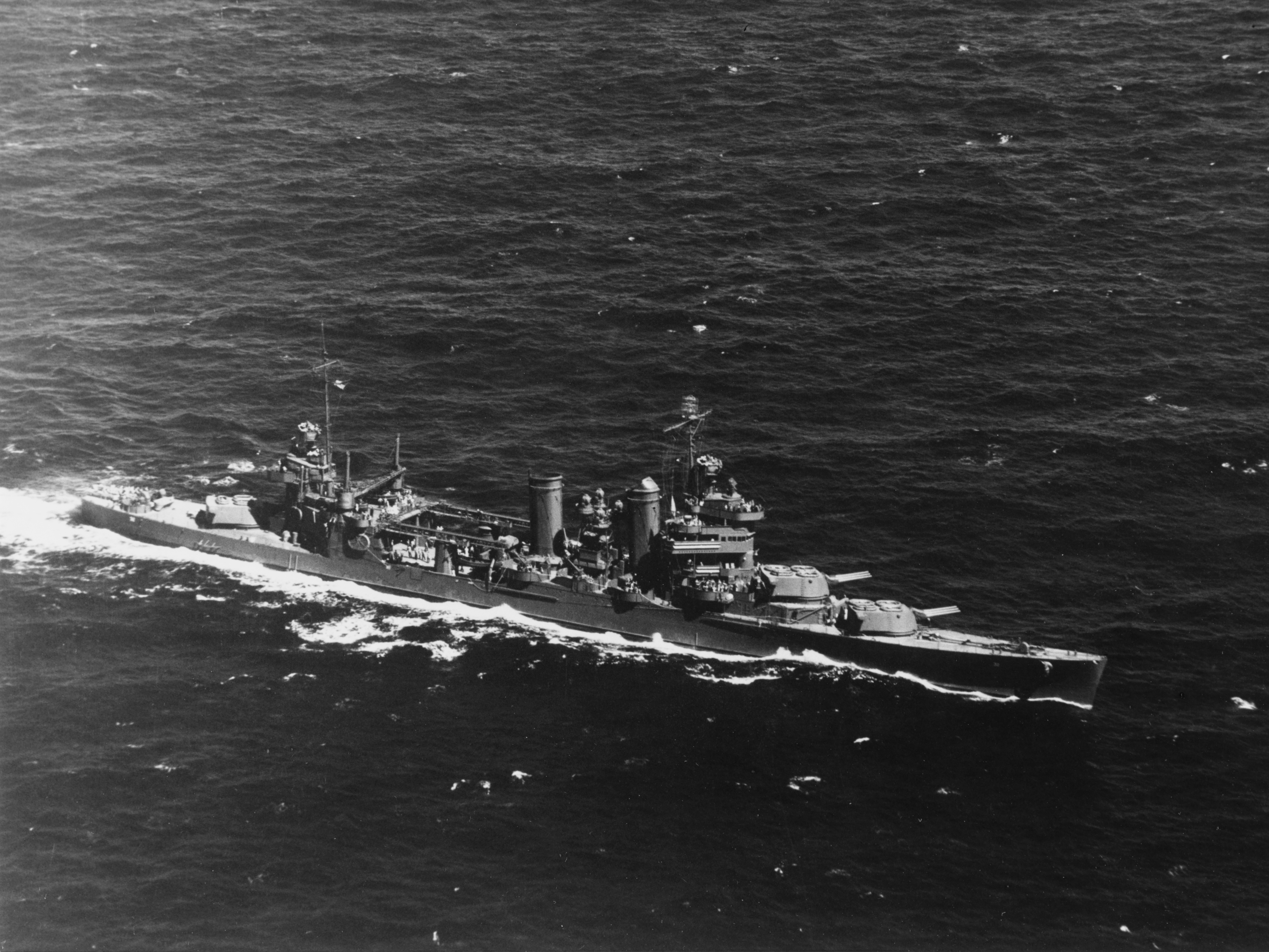
IJN Shinano was the largest aircraft carrier ever built. She displaced 72,000 tons fully loaded, 265 meters stem to stern, built on a Yamato-class battleship hull. She sailed on the evening of November 28, 1944.
She sank seventeen hours later.
The conversion
Shinano was laid down on May 4, 1940, as the third Yamato-class battleship. After the Japanese lost four carriers at Midway in June 1942, the hull, then 45 percent complete, was ordered converted to a carrier.
She was launched on October 8, 1944. A caisson malfunction during the launch damaged her bow below the waterline. Repaired in eighteen days. Commissioned on November 19.
The ship was photographed only three times in her existence. The Japanese never released an official photograph during construction. She was the only major 20th-century warship with no official construction photos.
The captain’s warning
Captain Toshio Abe knew the ship wasn’t ready. He requested a delay in sailing and gave specific reasons: the majority of watertight doors had never been installed. Compartment bulkheads had unsealed holes for cables, ventilation ducts, and pipes. Air tests had never been conducted. Fire mains and pumps didn’t work. The crew had no training with portable pumps.
His request was denied. He was ordered to sail from Yokosuka to Kure, roughly 300 miles, escorted by three destroyers: Isokaze, Yukikaze, and Hamakaze.
Shinano left Yokosuka at 18:00 on November 28, 1944, carrying 2,175 officers and crew, 300 shipyard workers, 40 civilians, 50 Ohka kamikaze flying bombs, and 6 Shinyo suicide boats.
The submarine
USS Archerfish was a Balao-class submarine on her fifth war patrol, commanded by Commander Joseph F. Enright. At 20:48, Archerfish’s lookouts spotted what they initially took for a tanker leaving Tokyo Bay.
It was the largest aircraft carrier in the world.
Enright tracked the target from ahead for six hours, maneuvering for position. Shinano was zigzagging. Her course changes kept bringing her closer to the submarine.
At 03:17 on November 29, Enright fired six torpedoes from roughly 1,400 yards. He had set them to run shallow at ten feet, aiming to hole the hull high and increase the chance of capsizing.
Four hit.
Seven hours and forty minutes
The torpedoes struck between the anti-torpedo bulge and the waterline. In a ship with functioning watertight compartments, four torpedo hits would have been serious but survivable. Shinano displaced more than the Yamato-class battleships that absorbed dozens of hits at Leyte Gulf.
But the watertight doors didn’t exist. The bulkhead holes were open. Minutes after the last hit, the executive officer reported hearing air rushing through gaps where doors should have been. Seawater was pouring through the ship’s interior.
Captain Abe ordered full speed maintained. He believed the Yamato-class armor could handle American torpedoes, which he considered weaker than Japanese designs. The decision was wrong on every level. Full speed pushed more water through the breaches and accelerated the flooding.
The ship lost power around 06:00. She listed progressively to starboard. The damage control crews had no training, no working pumps, and no sealed compartments to pump out anyway.
At 10:57, Shinano capsized and sank in 4,000 meters of water, roughly 65 miles from shore.
1,435 men died. Captain Abe went down with his ship.
1,080 survived.
Nobody believed him
When Enright reported sinking a carrier of over 28,000 tons, Naval Intelligence didn’t believe him. The US had no intelligence that Shinano existed. They credited Archerfish with sinking a smaller carrier.
After the war, when the full picture emerged, it turned out the target had displaced 72,000 tons. Shinano was the largest warship ever sunk by a submarine. Eighty years later, nothing bigger has gone down to a torpedo.
Japan suppressed the news too. Survivors were confined to Mitsuko-jima island until January 1945 to prevent word from spreading. The loss was not publicly acknowledged until after the surrender.
Enright received the Navy Cross. In 1987 he co-authored a book: Shinano! The Sinking of Japan’s Secret Supership.
Still there
Shinano lies in approximately 4,000 meters of water at 33 degrees 07’N, 137 degrees 04’E. Nobody has visited the wreck. At that depth, nobody is likely to for a long time.
The Yamato Museum in Kure, where Shinano was headed the night she sank, now houses one of the three known photographs. A marine engineer named Hiroshi Arakawa took it on November 11, 1944, eighteen days before she went down. She’s underway during sea trials. It’s the only image of her moving through open water.
Sources
- Japanese aircraft carrier Shinano — Wikipedia
- USS Archerfish (SS-311) — Wikipedia
- Enright, Joseph F. and James W. Ryan. Shinano! The Sinking of Japan’s Secret Supership. St. Martin’s Press, 1987.
- Joseph F. Enright — Wikipedia