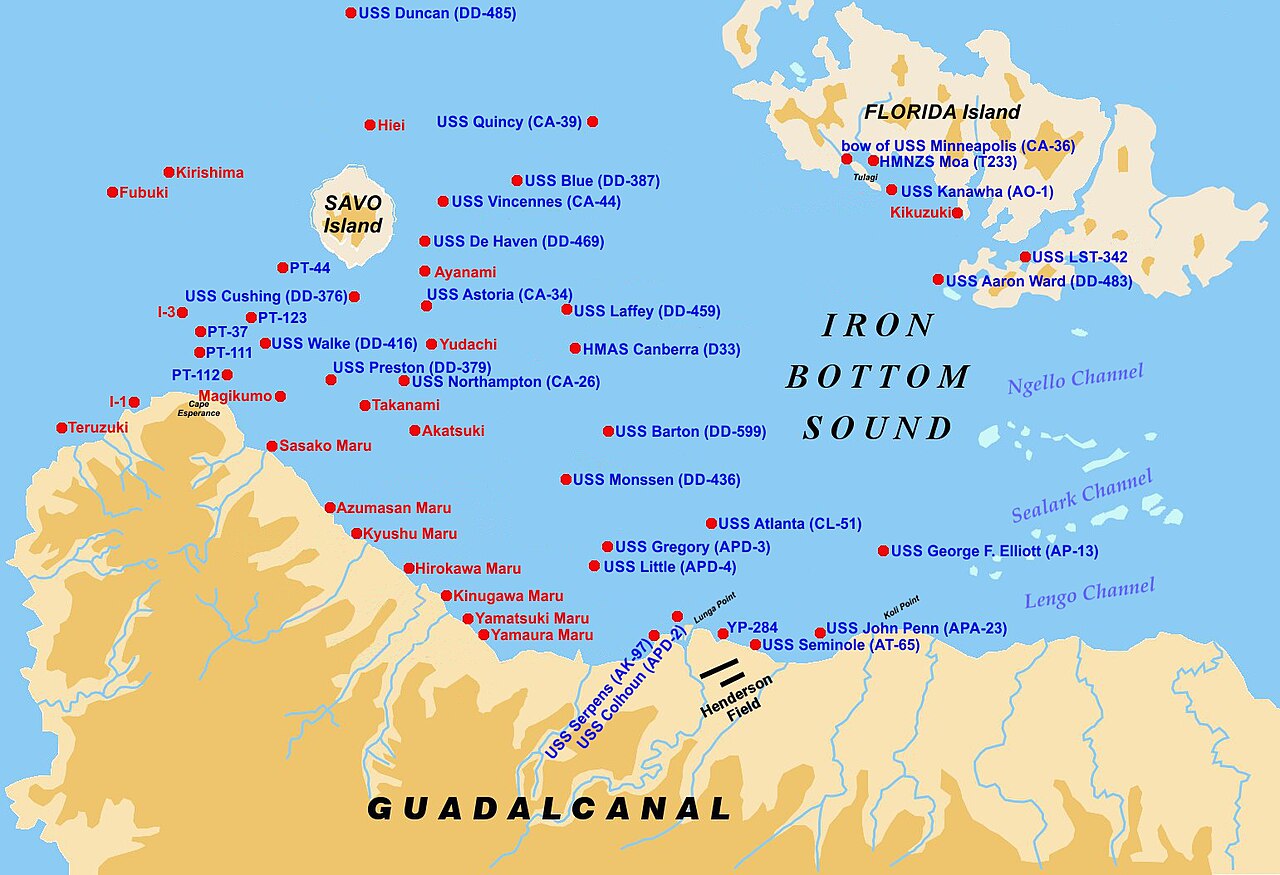
The body of water between Guadalcanal and Savo Island in the Solomon Islands is about 30 miles long and 10 miles wide. In six months of 1942 and 1943, over fifty warships sank there. The bottom ranges from 300 to 1,400 meters deep. It is the densest concentration of warship wrecks on earth.
During the campaign, sailors called the channel “The Slot” because of its shape. Afterward, they called it Ironbottom Sound.
Both names stuck.
August 9: thirty-seven minutes
The first major engagement set the tone. On the night of August 8-9, 1942, Vice Admiral Gunichi Mikawa led seven cruisers and one destroyer from Rabaul down The Slot toward the Allied invasion fleet anchored off Guadalcanal.
The Allies had landed on Guadalcanal the day before. Rear Admiral Richmond Kelly Turner’s transports were still unloading. A screen of six heavy cruisers and several destroyers guarded the approaches.
Mikawa attacked at 01:33 on August 9. The Battle of Savo Island lasted thirty-seven minutes. It was the worst defeat in the history of the United States Navy at sea.
The heavy cruiser USS Quincy was hit by two torpedoes and at least 57 shells. Her captain, Samuel Moore, was killed on the bridge. 370 of her crew died. She sank at 02:35.
USS Vincennes took three torpedoes and dozens of shells. Captain Frederick Riefkohl survived. 332 of his crew did not. She went down at 02:50.
USS Astoria absorbed several torpedo hits and burned through the night. Captain William Greenman was wounded. She sank the following afternoon. 216 dead.
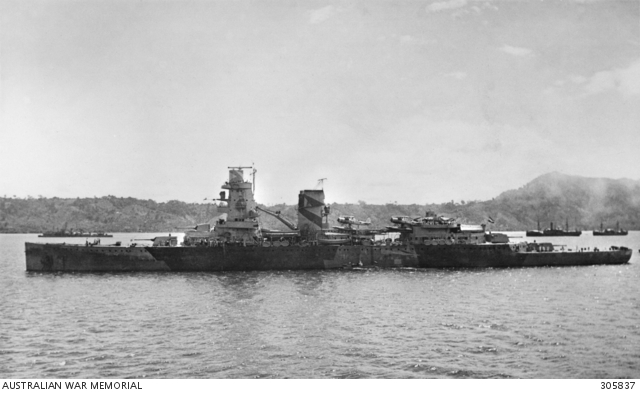
HMAS Canberra, an Australian heavy cruiser, was hit by at least 24 shells and two torpedoes in the opening minutes. Captain Frank Getting was mortally wounded. 84 of her crew were killed. She was scuttled the next morning because she couldn’t be saved.
Four heavy cruisers, gone before breakfast. 1,077 Allied sailors dead in one night. Japan lost 58 men and zero ships.
The slot run
After Savo Island, the Japanese used The Slot as a highway. Fast destroyer squadrons — the “Tokyo Express” — ran down the channel at night to deliver troops, supplies, and ammunition to Japanese forces on Guadalcanal. They would arrive after dark, unload in hours, and be gone before dawn.
The Allies tried to stop them. The result was a series of night battles fought in those same narrow waters between August 1942 and February 1943: Cape Esperance, the two Naval Battles of Guadalcanal, Tassafaronga.
Each one added more steel to the bottom.
November 13: the five brothers
The First Naval Battle of Guadalcanal, November 12-13, 1942, was fought at ranges so close that ships rammed each other. Rear Admiral Daniel Callaghan led a column of five cruisers and eight destroyers against a Japanese bombardment force that included the battleship Hiei, 36,600 tons.
Callaghan was killed on the bridge of USS San Francisco. Rear Admiral Norman Scott, the second in command, was killed on the bridge of USS Atlanta. Two admirals dead in the same action.
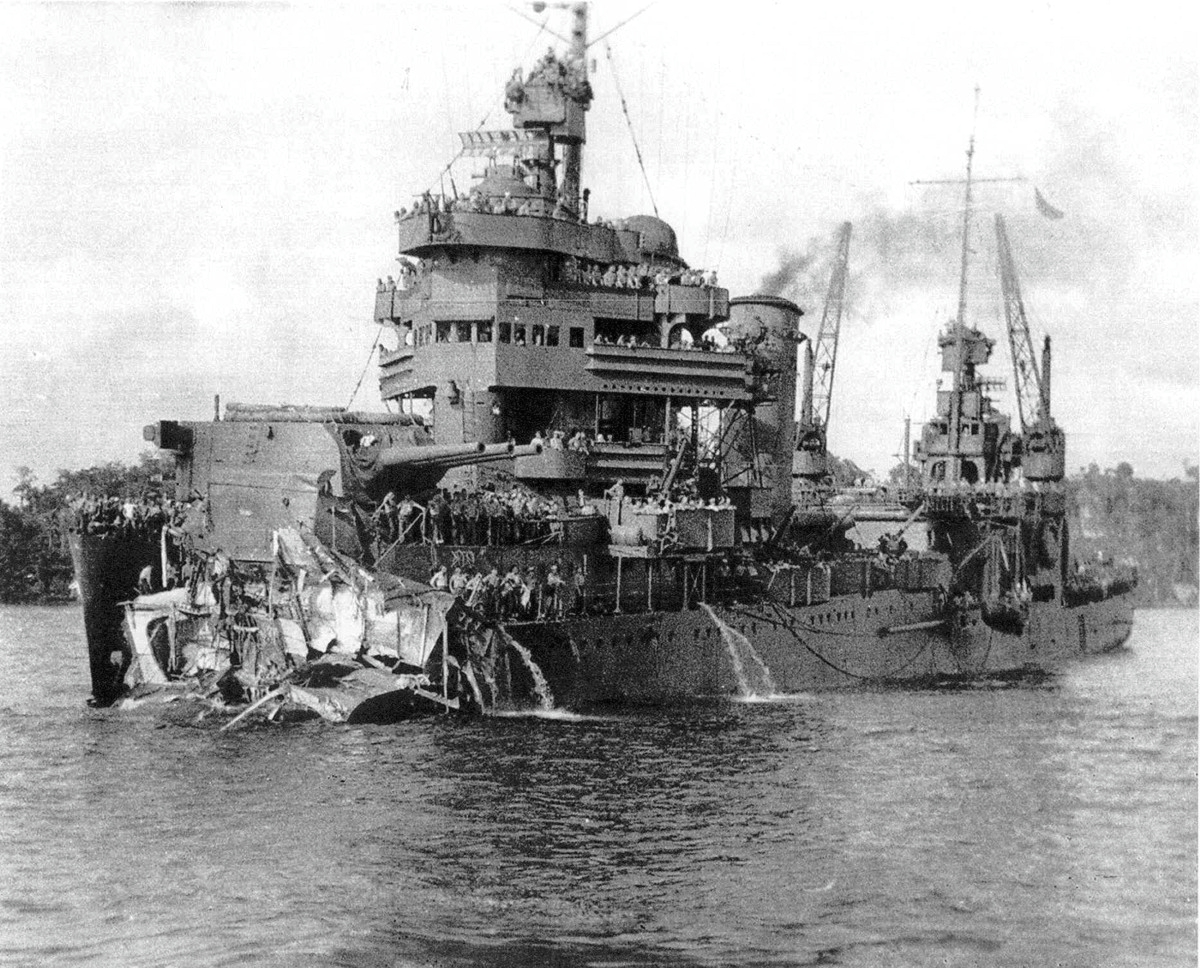
The light cruiser USS Juneau took a torpedo during the melee and limped away. The next morning, a Japanese submarine, I-26, put a second torpedo into her. Juneau exploded. The blast was so violent that nearby ships assumed there were no survivors and didn’t stop.
687 men died. Among them were five brothers from Waterloo, Iowa: George, Francis, Joseph, Madison, and Albert Sullivan. They had enlisted together. They served together. They died together.
Only 10 of Juneau’s crew survived. They spent eight days in the water before rescue.
The Sullivan brothers’ deaths led directly to the U.S. military’s Sole Survivor Policy, which prevents all members of a family from serving in the same combat unit. The policy remains in effect today.
The inventory
By February 1943, when the Japanese evacuated their remaining forces from Guadalcanal, the seabed held the following:
American losses in the sound and its immediate approaches: the heavy cruisers Quincy, Vincennes, Astoria, and Northampton. The light cruisers Atlanta and Juneau. The destroyers Barton, Cushing, Laffey, Monssen, Preston, Walke, DeHaven, and Blue. Transports George F. Elliott and John Penn. Others.
Japanese losses: the battleship Hiei. The destroyers Fubuki, Yudachi, Akatsuki, Ayanami, Takanami, and Teruzuki. Submarines I-1, I-3, and I-123. At least seven transports beached and destroyed on the north coast of Guadalcanal, including Kinugawa Maru, whose rusted hulk is still visible at low tide.
Australian losses: HMAS Canberra.
The total Allied toll for the entire Guadalcanal campaign: roughly 30 ships sunk and over 7,000 killed. Japan lost about 20 ships and an estimated 25,000 men, many from starvation and disease on the island itself.
Mapping the dead
In January 2015, Paul Allen’s research vessel Petrel mapped 380 square miles of Ironbottom Sound using a Bluefin autonomous underwater vehicle equipped with side-scan sonar. The team identified 29 wreck sites and six debris fields. Six wrecks were positively identified: Quincy, Vincennes, Astoria, Northampton, Atlanta, and Canberra.
In July 2025, Robert Ballard’s Exploration Vessel Nautilus returned with remotely operated vehicles and the University of New Hampshire’s uncrewed surface vessel DriX. They mapped over 1,000 square kilometers of seafloor at the highest resolution ever achieved there. Thirteen wreck sites were surveyed. Four ships were documented for the first time, including the bow section of USS New Orleans, which had been blown off by a torpedo at Tassafaronga, and the Japanese destroyer Teruzuki.
The expedition streamed 138 hours of live ROV footage. Viewers watched the cameras pass over gun turrets still pointed at targets that sank eighty years ago.
The wrecks sit at depths ranging from 300 meters to over 1,050 meters. At those depths, in water that warm, the steel corrodes slowly. The ships are recognizable. Their guns still point.
Frequently Asked Questions
Why is it called Ironbottom Sound?
American and Allied sailors gave the strait between Guadalcanal and Savo Island the name “Ironbottom Sound” because of the sheer number of warships sunk there during the six-month Guadalcanal campaign of 1942-1943. Over fifty vessels from both sides — cruisers, destroyers, battleships, submarines, and transports — went to the bottom, making it the densest concentration of warship wrecks on earth.
The full story: The name emerged organically during the campaign. See the introduction and “The inventory” section above for the full tally.
How many ships were sunk at Guadalcanal?
Roughly 50 ships were sunk in and around Ironbottom Sound during the campaign. The Allies lost approximately 30 ships including four heavy cruisers, two light cruisers, and numerous destroyers, with over 7,000 killed. Japan lost about 20 warships plus at least seven beached transports, along with an estimated 25,000 men from combat, starvation, and disease combined.
The full story: See “The inventory” above for a detailed breakdown of losses on both sides.
Sources
- Ironbottom Sound - Wikipedia
- Expedition Reveals Thirteen Shipwrecks - Naval History and Heritage Command
- Battle of Savo Island - Naval History and Heritage Command
- Naval Battle of Guadalcanal - Wikipedia
- A new expedition to Guadalcanal reveals WWII shipwrecks - National Geographic
- Paul Allen’s Petrel finds wrecks of USS Astoria and more
Photo credit: Wrecks in Ironbottom Sound map — Wikimedia Commons, File:Wrecks in the Ironbottom Sound.jpg, CC-BY-SA-3.0