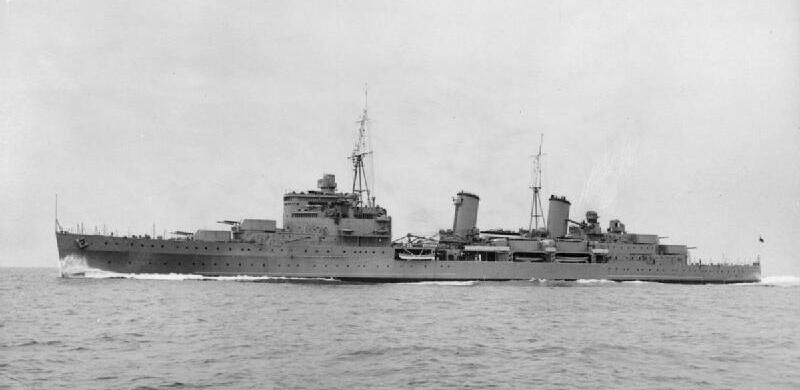
On April 28, 1942, HMS Edinburgh left Murmansk as the flagship escort for Convoy QP 11 — a homebound run from the Soviet Union back to Iceland. Captain Hugh Faulkner had 850 men aboard a Town-class light cruiser displacing 10,550 tons.
He also had 465 gold bars locked in the bomb room.
The gold — roughly 4.5 tons of it — was Stalin’s payment to the United States for Lend-Lease war materiel. Tanks, trucks, aircraft parts. The Soviets paid in bullion because nobody trusted Soviet currency, and a cruiser escorting an Arctic convoy was the safest way to move it. The gold was worth £1.5 million in 1942 money.
Two torpedoes from U-456
Two days out of Murmansk, on April 30, Kapitänleutnant Max-Martin Teichert in U-456 found the cruiser. His first torpedo struck the starboard side forward — just ahead of the compartment where the gold was stored. The blast opened a hole below the waterline and knocked out the forward boiler room. The crew slammed the watertight doors shut and kept the ship afloat.
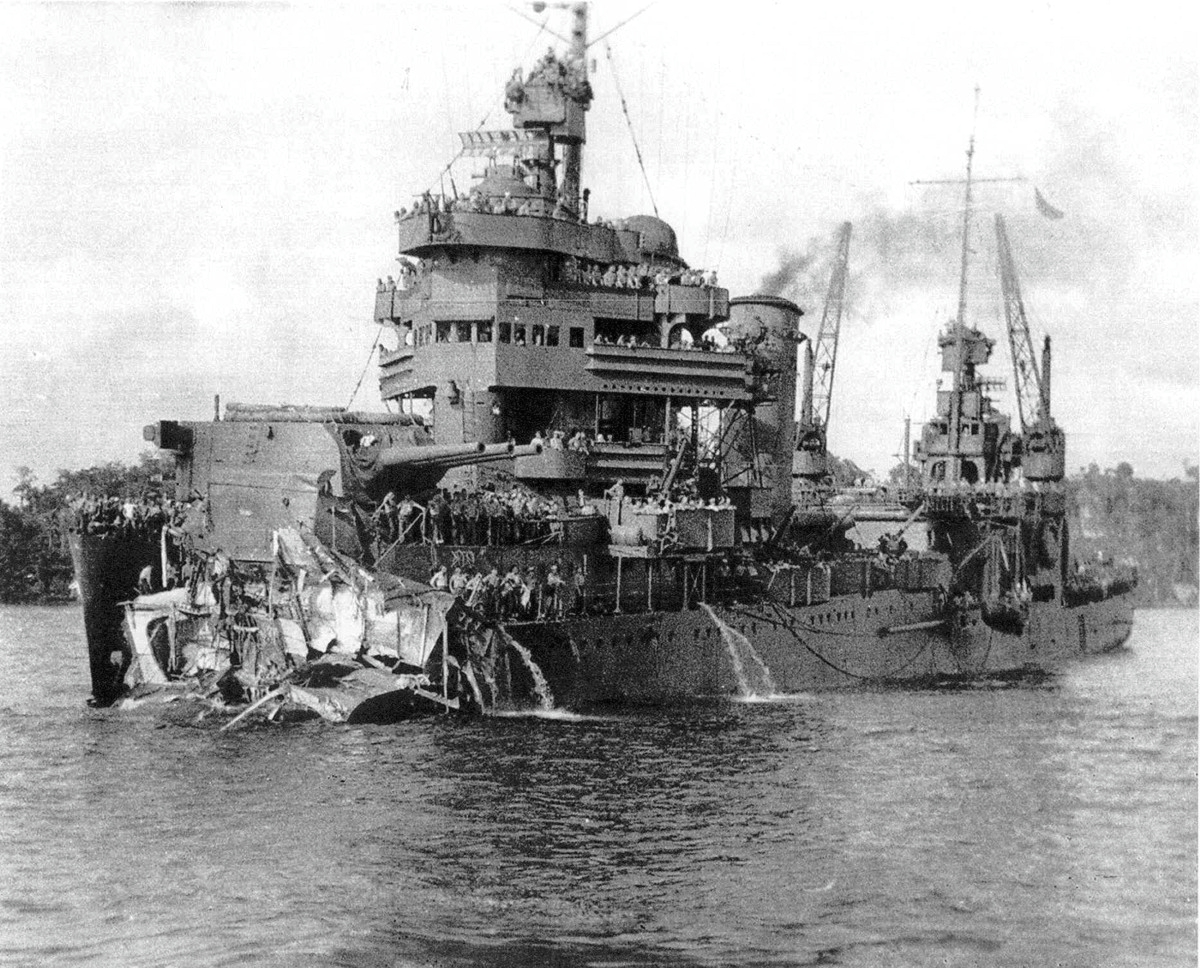
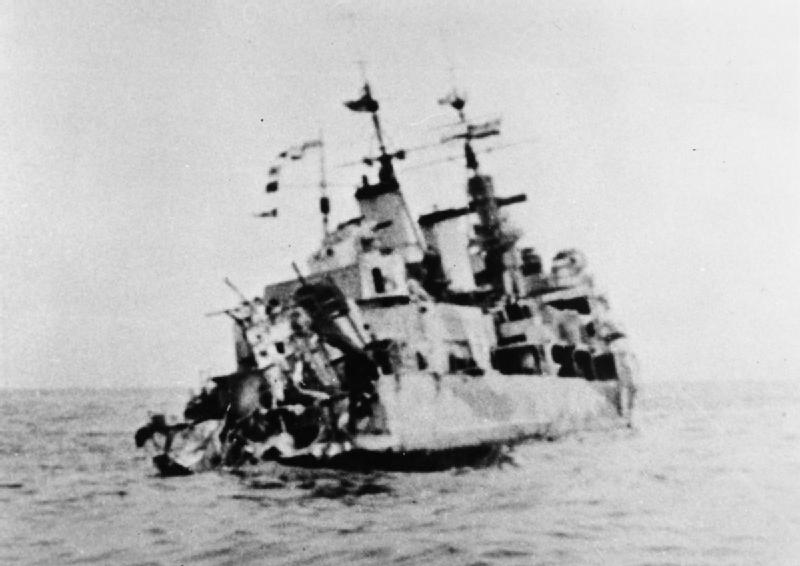
The second torpedo hit the stern. It destroyed the rudder and two of the four propellers. Edinburgh could still make way, but she could not steer.
Faulkner was now commanding a cruiser that could only travel in wide, looping circles.
The tow
The escort ships rigged towing cables and began dragging the crippled cruiser back toward Murmansk at walking speed. It was 250 miles. In the Barents Sea. In late April, which in the Arctic means ice fog, freezing spray, and poor visibility.
For two days they crawled southwest. German torpedo bombers found them but scored no hits.
Then, on May 2, three German destroyers appeared — Z7 Hermann Schoemann, Z24, and Z25. They had been sent specifically to finish the cruiser off.
A crippled ship fights back
The cruiser could not steer. But her 6-inch guns still worked. Edinburgh’s crew trained the turrets manually and opened fire.
Edinburgh’s second salvo hit Hermann Schoemann square. The shells wrecked her engine room and started fires that could not be controlled. Hermann Schoemann went dead in the water. Z24 and Z25 pulled alongside to take off her 223 survivors, then her crew scuttled her. A German destroyer sent to kill a crippled cruiser had been crippled by the crippled cruiser.
But Z24 and Z25 were still maneuvering. During the fight, one of them put a third torpedo into Edinburgh’s port side. The hit was opposite the first torpedo wound. The ship’s back was broken.
58 dead
Captain Faulkner gave the order to abandon ship. The minesweepers HMS Gossamer and HMS Harrier came alongside and took off roughly 800 men. Two officers and 56 ratings did not make it. The total dead from all three torpedo hits: 58.
Once the crew was clear, HMS Foresight fired a torpedo into the cruiser’s hull to scuttle her. Edinburgh sank in 800 feet of water, approximately 250 miles north of Murmansk.
The gold went with her.
Keith Jessop and the salvage of the century
For 39 years, the wreck sat undisturbed on the Barents Sea floor. The British government designated it a war grave. The Soviets still wanted their gold. The insurers wanted their money. Nobody could agree on who owned what, and nobody had the technology to work at 800 feet in Arctic conditions anyway.
Then Keith Jessop, a Yorkshire salvage diver with more ambition than funding, convinced the British and Soviet governments to let him try. His company, Jessop Marine, partnered with Wharton Williams Ltd and the German shipping company OSA. The contract gave the salvage team 45%, with the remaining 55% split between the UK and Soviet governments — two-thirds to the Soviets, one-third to Britain. The Americans got nothing. Their insurers had already paid out decades earlier.
In September 1981, Jessop’s divers descended to the wreck. They cut through the cruiser’s hull with underwater torches, working in near-zero visibility at extreme depth. The bomb room was partially collapsed. The divers worked by feel.
They found the first gold bar on September 15. Over the following weeks, they pulled out 431 of the 465 bars. When Arctic storms forced them to stop in early October, the recovered gold was worth £45 million.
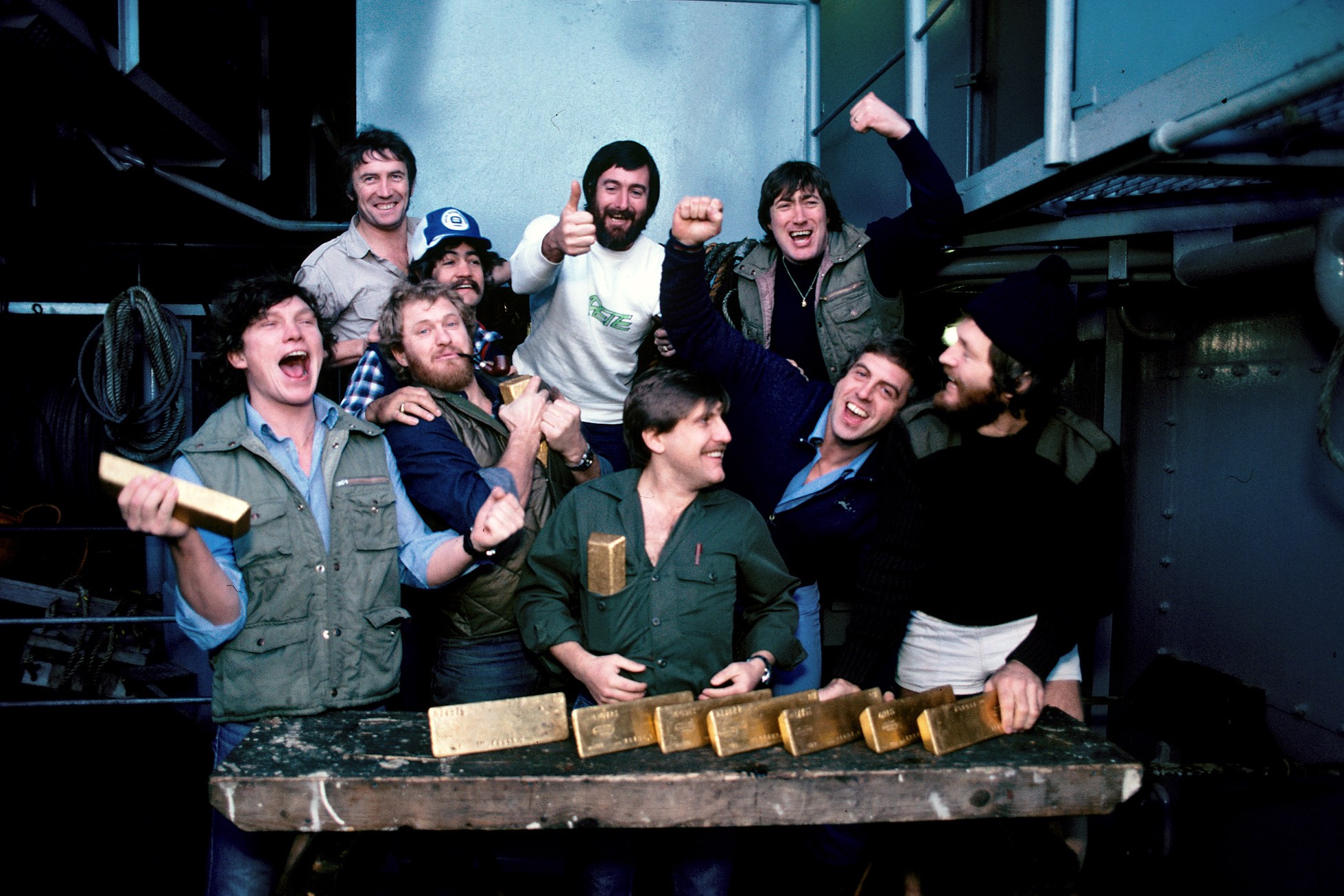
A second expedition in 1986 recovered 29 more bars. That left five bars still inside the wreck — roughly £5 million at today’s prices. They remain there, 800 feet down, inside a designated war grave that is now illegal to dive on without government permission.
What’s still down there
The wreck of HMS Edinburgh lies at approximately 72°N, 35°E in the Barents Sea. It is protected under the Protection of Military Remains Act 1986. The 58 men who died aboard her are still there too.
The 460 recovered gold bars were melted down and redistributed. No museum has one. No plaque marks the spot. Keith Jessop, the diver who made it happen, died in 2010. His share of the salvage made him a millionaire. He spent most of it.
The five missing bars have never been accounted for. They are either buried under collapsed steel inside the wreck or were never loaded in Murmansk in the first place. Nobody knows which.
Photo credits
- Hero image: HMS Edinburgh on sea trials, July 1939. Imperial War Museums (FL 4169). Public domain, UK Government work.
- Torpedo damage: HMS Edinburgh stern damage, May 1942. Imperial War Museums (MH 23866). Public domain, UK Government work.
- Salvage crew: Keith Jessop’s team with recovered gold bars, 1981. The Times.
Sources