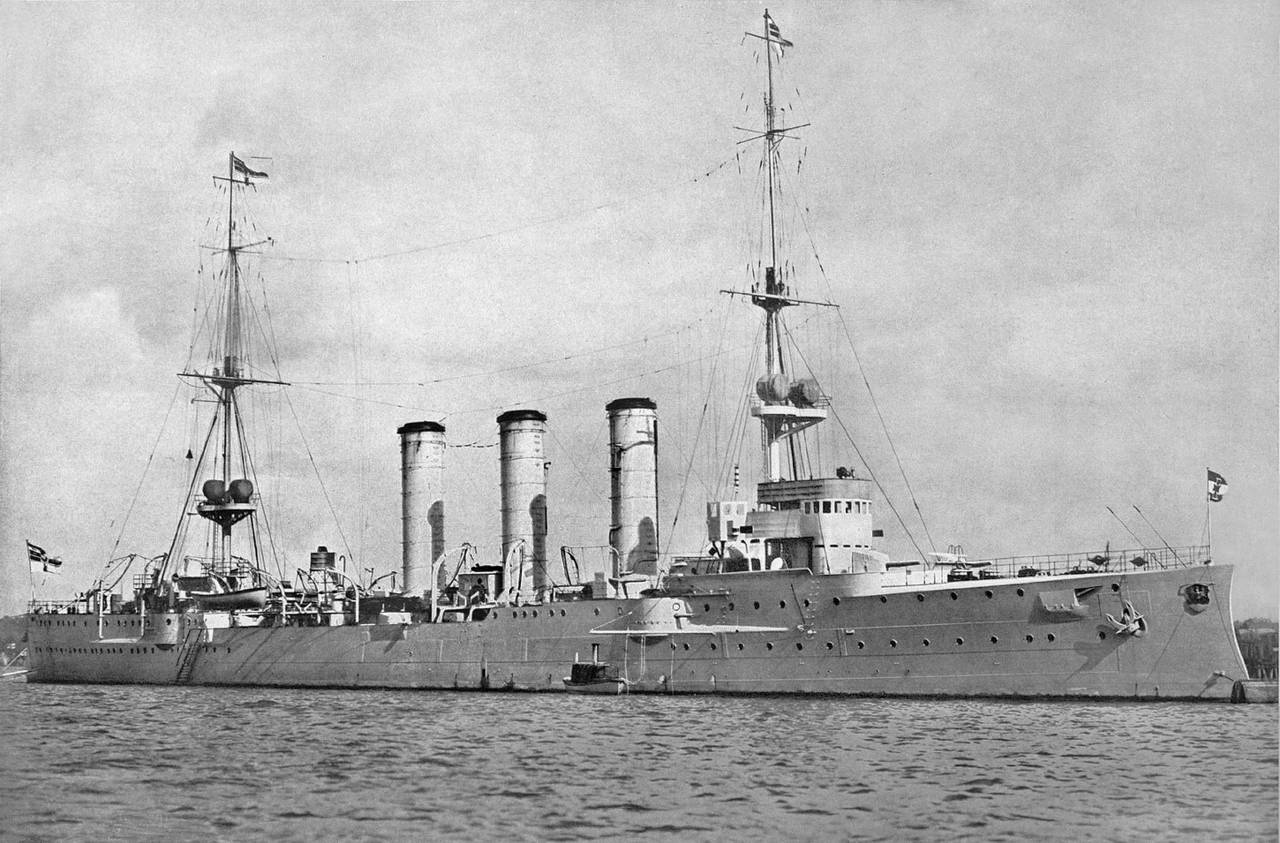
SMS Emden was a German light cruiser that terrorized Allied shipping across the Indian Ocean in 1914. She captured or sank over twenty merchant ships, shelled the oil tanks at Madras, and then pulled off one of the most audacious raids of World War I: sneaking into a British-controlled harbor to torpedo a warship at anchor.
On the morning of October 28, 1914, the Russian cruiser Zhemchug sat at anchor in Penang harbor. Boilers cold. Ammunition hoists dead. Magazine keys ashore. No lookouts posted.
Her captain, Commander Baron Cherkassov, was at the Eastern & Oriental Hotel with a woman.
At 05:18, a torpedo hit the Zhemchug aft of her second funnel. Ten minutes later, a second torpedo broke the ship in half. Cherkassov watched from the hotel as his cruiser rolled over and sank. Eighty-two of his crew were dead.
The ship that killed them was SMS Emden. She had sailed straight into a British-controlled harbor, in plain sight, because nobody thought to question the extra smokestack.
The fake funnel
SMS Emden had three funnels. Most British cruisers in the area had two or four. Captain Karl von Muller solved this by rigging a dummy fourth funnel from canvas and scrap metal. In the dark, from a distance, she looked like HMS Yarmouth.
Harbor lookouts saw four funnels and waved her through. It wouldn’t be the last time these waters saw a warship slip through defenses — three decades later, the Battle of the Java Sea would prove that Southeast Asian straits were still deadly ground.
Von Muller brought the Emden within 300 yards of the Zhemchug before running up the German ensign. By then it was too late.
A ship that couldn’t fight back
The Zhemchug had arrived two days earlier for boiler repairs. Only one of sixteen boilers worked. She couldn’t move. Her ammunition hoists had no steam, so the crew had stacked twelve ready rounds on deck. That was it.
Cherkassov had given most of the crew shore leave. The British commander of the China Station, Vice Admiral Jerram, had warned the Russians to keep their ships ready. Cherkassov ignored the warning and went to the E&O Hotel.
The Sarkies brothers built that hotel in 1885. Sea-facing promenade, views across the Straits of Malacca. The same water where, eight hours later, his crew would be dying.
Ten minutes
At 05:18, von Muller ordered the dummy funnel struck and fired a torpedo from 400 yards. It hit the Zhemchug’s starboard side. The Russian crew scrambled to fire back with twelve rounds. That was all they had.
The Emden circled. At 05:28, a second torpedo hit near the bridge and detonated the forward magazine. The cruiser broke in half and went down in minutes.
Eighty-two dead. A hundred and forty-three wounded. Malay fishermen pulled survivors from the water.
On the way out, the Emden sank the French destroyer Mousquet too, then stopped to pick up 36 French survivors before leaving. The whole raid took less than an hour.
Cherkassov survived from the comfort of the E&O Hotel, watching through windows that faced the same water where his crew was drowning.
The court-martial
The Russian Navy charged him with gross negligence. No lookouts, magazine keys ashore, one boiler working, most of the crew on leave, Jerram’s warnings ignored. He got three and a half years in prison, stripped of rank, expelled from the Navy. His deputy got eighteen months.
Eighty-two families probably thought the sentences were light.
What happened to the Emden
Twelve days later, von Muller brought the Emden to the Cocos Islands to destroy a British cable station. He sent 50 men ashore under Lieutenant von Mucke to smash the equipment.
While they were on the island, the Australian cruiser HMAS Sydney showed up and outgunned the Emden badly. Von Muller beached his wrecked ship on North Keeling Island. He lost 134 killed and 69 wounded.
The 50 men on the island were stranded. Von Mucke commandeered a rotting 97-ton schooner, sailed it to the Dutch East Indies, then traveled by steamer to Arabia, fought Bedouin raiders, crossed the desert, and eventually reached the Ottoman railway. All 50 made it back to Germany. They were the only German military unit to return home from overseas during the entire war.
Still there
There’s a memorial to the Zhemchug’s dead at Western Road Cemetery in George Town. It lists 82 names.
The Eastern & Oriental Hotel is still open. You can book a sea-facing suite and look out at the same water where the Zhemchug went down.
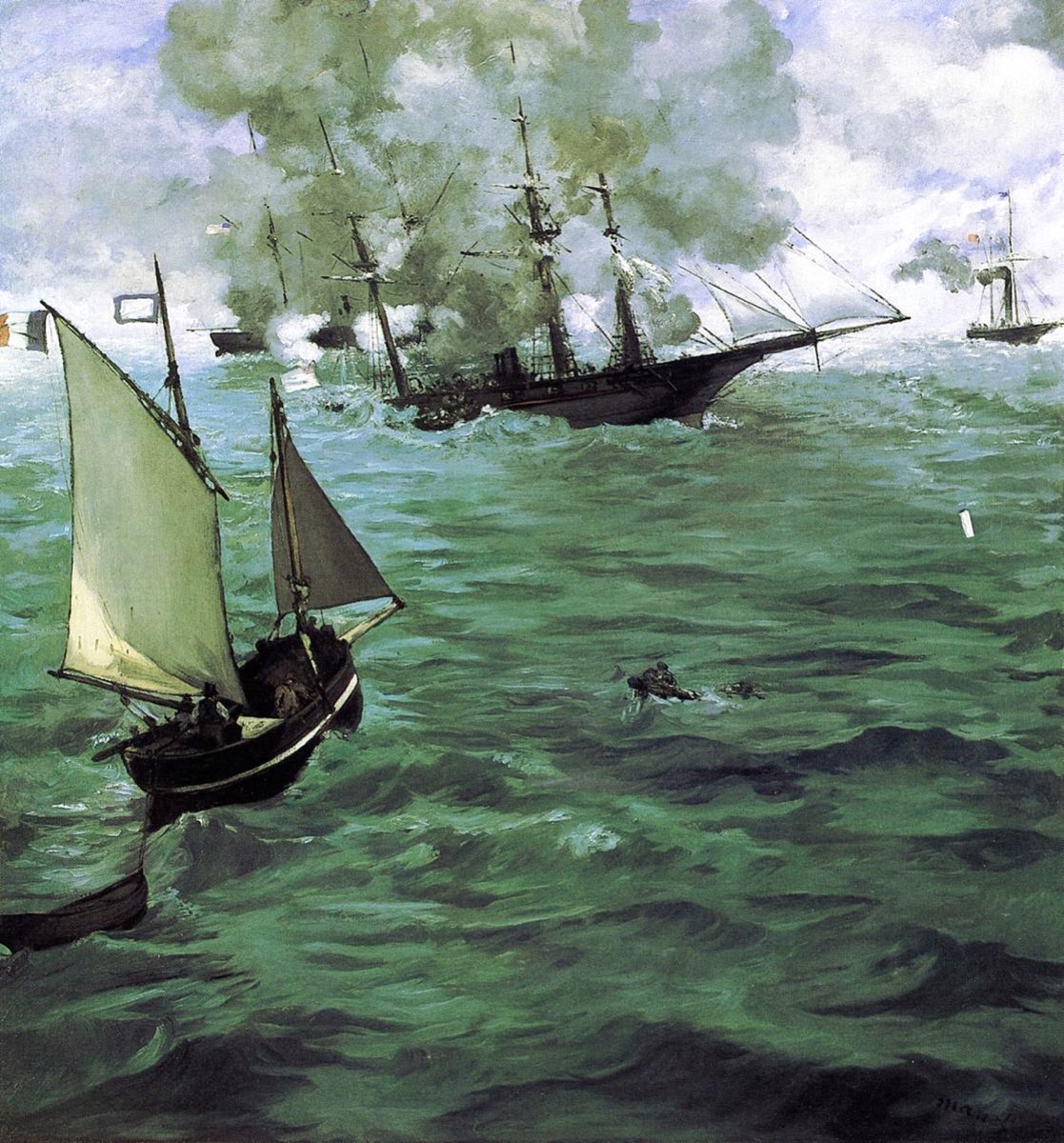
The fake funnel was canvas stretched over a metal frame. It probably took the crew an afternoon to build. It worked once, and that was enough. Von Muller was following a long tradition of commerce raiders who operated alone and lived on audacity — the CSS Alabama did the same thing half a century earlier, with a captain just as theatrical. And the waters of the Indian Ocean and Southeast Asia would see plenty more deception before the century was out — the Battle of the Java Sea showed that these straits stayed dangerous well into the next war.
Frequently Asked Questions
What happened to SMS Emden?
SMS Emden was destroyed on November 9, 1914, at the Cocos Islands by the Australian cruiser HMAS Sydney. Captain Karl von Muller had brought the Emden to the Cocos Islands to destroy a British cable and wireless station. While 50 of his crew were ashore smashing equipment, HMAS Sydney arrived and outgunned the Emden. Von Muller beached the burning wreck on North Keeling Island. He lost 134 killed and 69 wounded. The survivors became prisoners of war.
How did SMS Emden’s crew escape from the Cocos Islands?
The 50 men stranded ashore at the Cocos Islands under Lieutenant Hellmuth von Mucke commandeered a 97-ton schooner called the Ayesha. They sailed it to the Dutch East Indies, transferred to a steamer bound for Arabia, fought Bedouin raiders, crossed the Arabian desert, and reached the Ottoman railway. All 50 men made it back to Germany — the only German military unit to return home from overseas during the entire war.
Why was SMS Emden famous?
SMS Emden became the most famous commerce raider of World War I because of Captain Karl von Muller’s combination of tactical brilliance and chivalry. In three months, the Emden captured or sank over twenty Allied merchant ships, shelled the oil storage tanks at Madras, and sank a Russian cruiser and a French destroyer at Penang — all while treating prisoners humanely and following the rules of war. Von Muller was admired not only in Germany but also in Britain and the Allied nations for his conduct.
How did SMS Emden get into Penang harbor?
SMS Emden had three funnels, but Captain von Muller ordered a dummy fourth funnel built from canvas and scrap metal. With four funnels, the Emden resembled the British cruiser HMS Yarmouth. Harbor lookouts saw the silhouette, assumed she was friendly, and waved her through. Von Muller brought the ship within 300 yards of the Russian cruiser Zhemchug before raising the German flag and firing.
Sources
- van der Vat, Dan. Gentlemen of War: The Amazing Story of Karl von Muller and the SMS Emden. Hodder & Stoughton, 1983.
- Hoyt, Edwin P. The Last Cruise of the Emden. Macmillan, 1966.
- Australian War Memorial: SMS Emden collection
- Wikipedia: Battle of Penang
- Wikipedia: SMS Emden
- Wikipedia: Russian cruiser Zhemchug