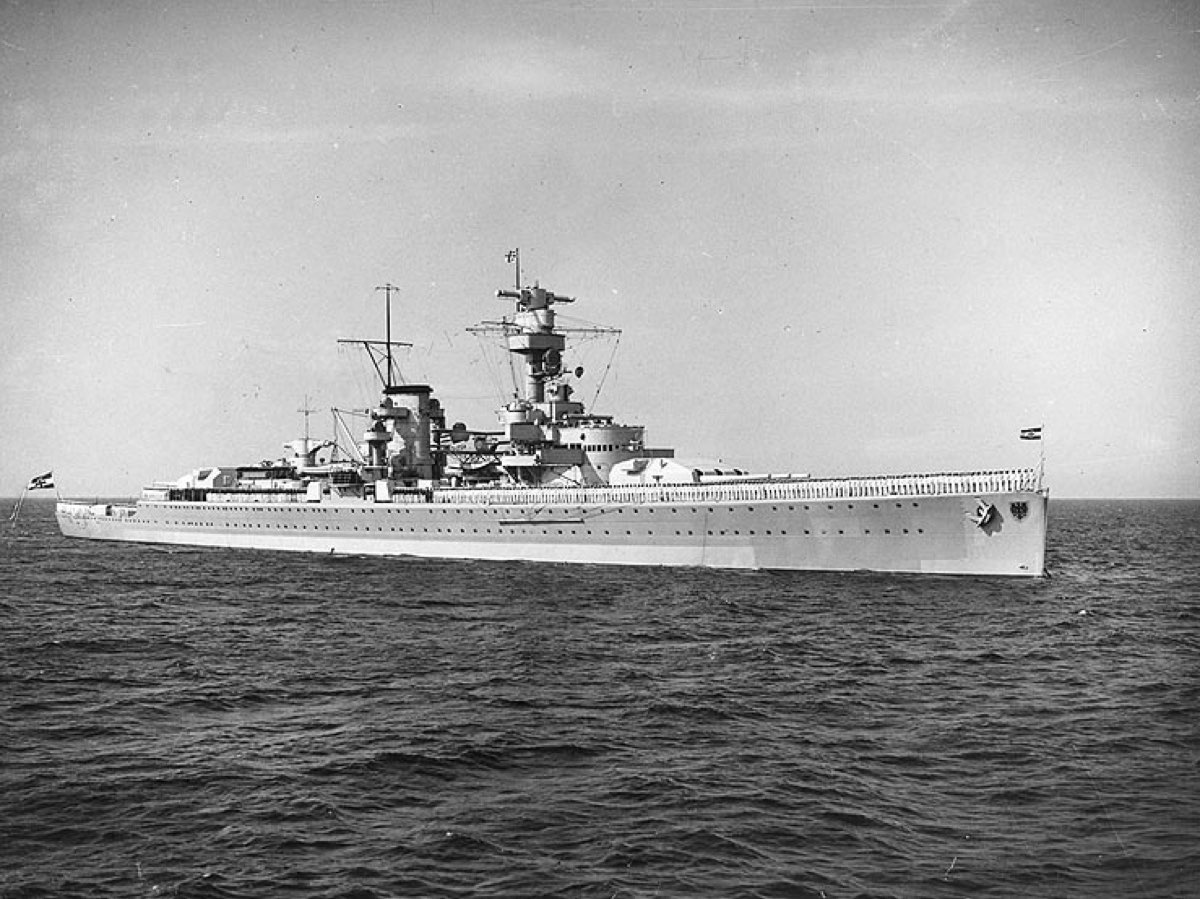
In 1939, Germany had three pocket battleships. They were called “pocket battleships” because they packed six 283mm guns, battleship-caliber weapons, onto a hull that weighed around 12,000 tons. Fast enough to outrun anything they couldn’t outfight.
The lead ship was named Deutschland. As in “Germany.”
That August, before war was even declared, Deutschland slipped into the North Atlantic to wait for orders. When war came on September 1, she started hunting. But her cruise was unimpressive — only two merchant ships sunk.
Then came the City of Flint. On October 9, Deutschland captured this American freighter carrying contraband to Britain. A German prize crew tried to sail her to Germany via Norway and the Soviet port of Murmansk. The diplomatic fallout was immediate. The US was still neutral, and seizing American ships was not a good way to keep it that way. Norway eventually interned the prize crew and returned the ship.
Meanwhile, Deutschland’s sister ship Admiral Graf Spee was having a far more dramatic run in the South Atlantic — until three British cruisers cornered her at the River Plate on December 13. Graf Spee was scuttled in Montevideo four days later.
Hitler looked at the situation and had a thought: what if a ship called “Deutschland” gets sunk? The headline would write itself. “Germany sunk.”
In November 1939, he ordered the ship renamed. She became Lutzow, after a Prussian officer from the Napoleonic Wars.
Under her new name, Lutzow had one more chance to matter. On New Year’s Eve 1942, she was part of Operation Regenbogen — a German attack on convoy JW-51B in the Barents Sea. The plan was a pincer: heavy cruiser Admiral Hipper from the north, Lutzow from the south, six destroyers in support.
It should have worked. The convoy’s escort was just six British destroyers.
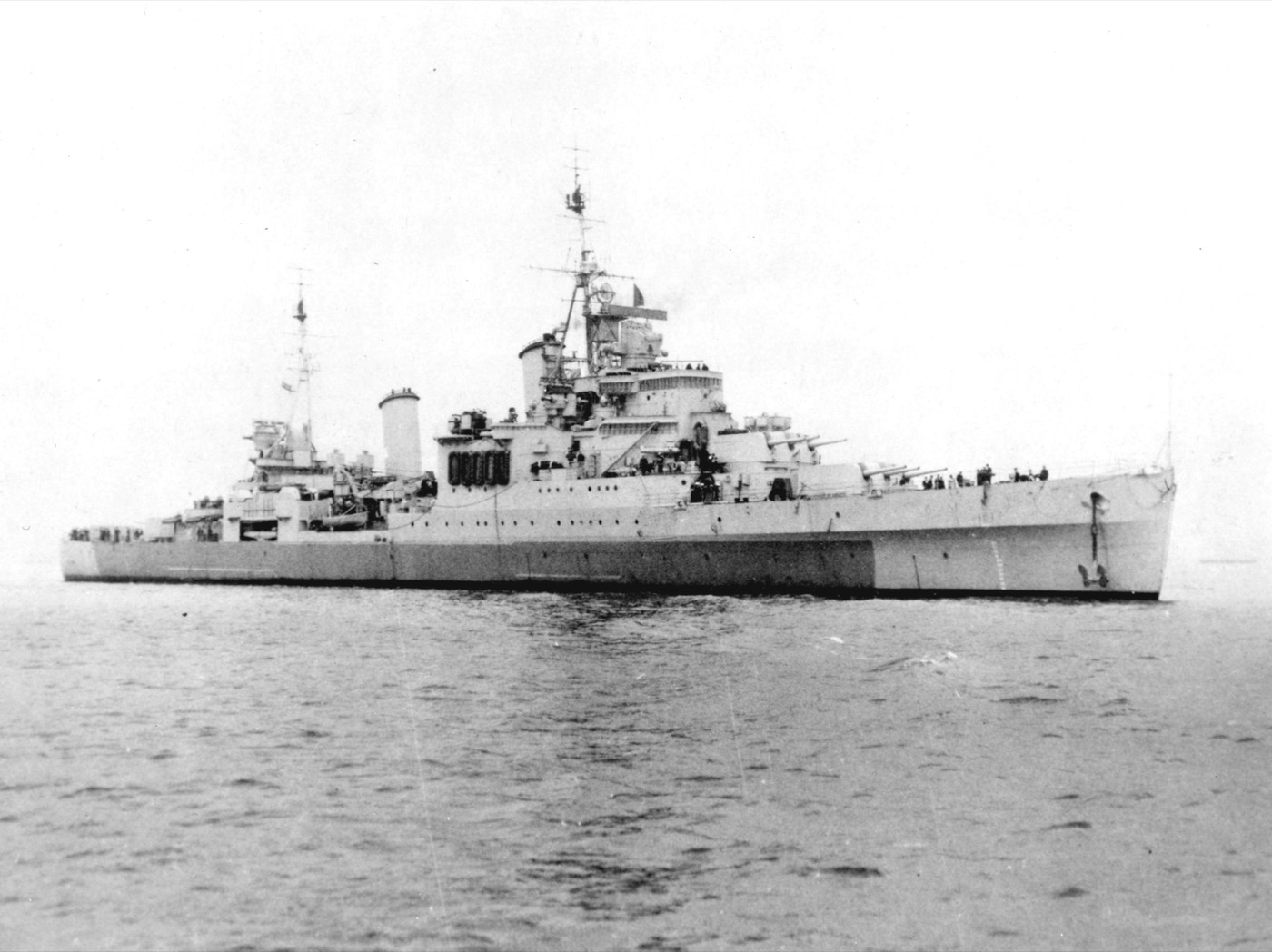
But Lutzow’s captain, under standing orders to avoid risk, fired at long range and then withdrew without pressing the attack. The British destroyers — especially HMS Onslow under Captain Robert Sherbrooke, who won the Victoria Cross for that fight — held out until cruisers Sheffield and Jamaica arrived. The convoy got through.
Hitler couldn’t even get a situation report for hours because of communications failures. When he finally heard what happened, he was incandescent. He declared the entire surface fleet useless and ordered it scrapped.
Grand Admiral Erich Raeder, commander-in-chief of the Kriegsmarine, resigned on January 30, 1943. He was replaced by Admiral Karl Donitz, the U-boat man, who managed to talk Hitler out of the most extreme measures. But the surface fleet was effectively sidelined for the rest of the war.
Lutzow spent her last days being bombed by the RAF at Swinemunde. On April 16, 1945, she settled in shallow water and was used as a stationary artillery battery, firing at the advancing Soviets. Her crew scuttled her on May 4, 1945.
The Soviets raised the wreck. They used it for target practice. Then they scrapped it.
Sources
- Koop, Gerhard, and Klaus-Peter Schmolke. Pocket Battleships of the Deutschland Class. Seaforth Publishing, 2014.
- O’Hara, Vincent P. The German Fleet at War, 1939-1945. Naval Institute Press, 2004.
- Wikipedia: Battle of the Barents Sea
- Williamson, Murray, and Allan R. Millett. A War to Be Won: Fighting the Second World War. Harvard University Press, 2000.
- Wikipedia: Deutschland-class cruiser