December 31, 1942. Convoy JW-51B was 200 miles north of Norway, bound for Murmansk with war supplies for the Soviet Union. Fourteen merchant ships. The close escort was six destroyers, two corvettes, a minesweeper, and two trawlers.
The senior officer was Captain Robert St. Vincent Sherbrooke, 41 years old, aboard HMS Onslow. His job was to get the convoy through. The Germans had other plans.
Operation Regenbogen
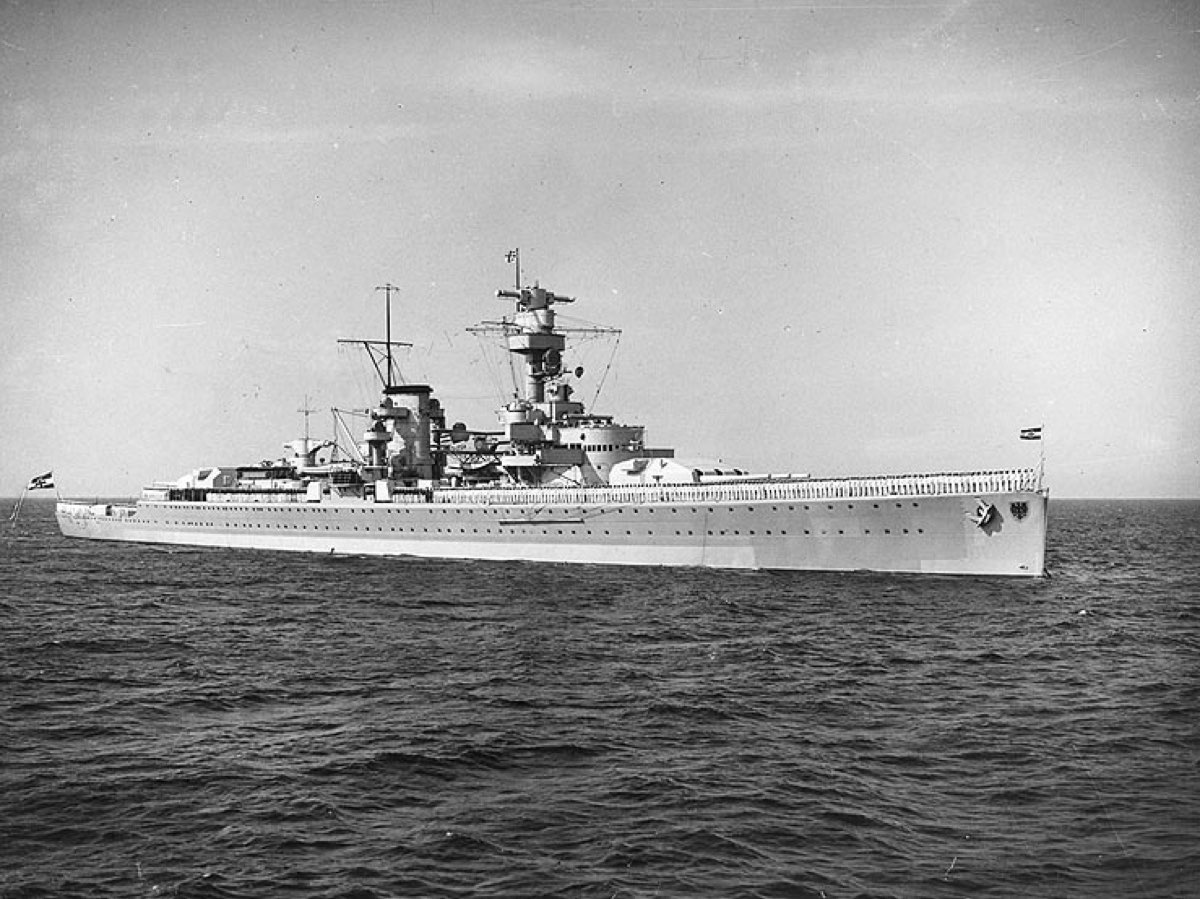
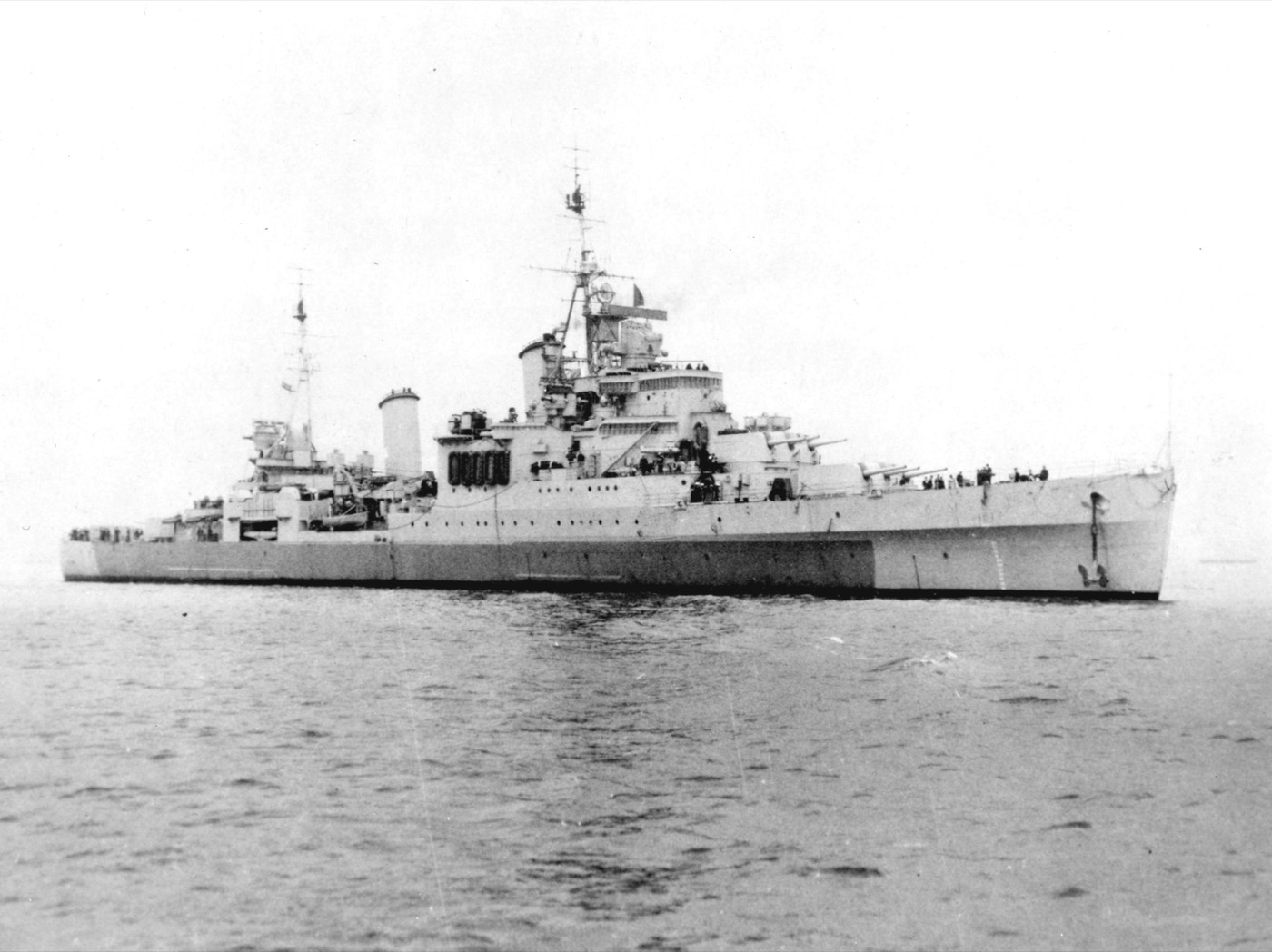
Vice Admiral Oskar Kummetz had the heavy cruiser Admiral Hipper — 18,200 tons, eight 8-inch guns — and the pocket battleship Lutzow — 14,290 tons, six 11-inch guns. Six destroyers screened them. The plan was a pincer. Hipper would attack from the north to draw off the escorts. Lutzow would come from the south and butcher the undefended merchants.
On paper, it was a slaughter waiting to happen. Two capital ships against six destroyers.
Sherbrooke did the math and charged anyway.
”I Will Attack”
At 09:30, Onslow spotted Hipper’s silhouettes on the horizon. Sherbrooke split his force. He took Onslow, Orwell, Obedient, and Obdurate straight at the heavy cruiser. He ordered HMS Achates to stay with the convoy and lay smoke.
For the next two hours, Sherbrooke’s destroyers played a lethal game. They would close to torpedo range, forcing Hipper to turn away. Hipper would retreat into smoke, reposition, and try again. Every time Kummetz pushed toward the convoy, Sherbrooke’s destroyers were in his face.
Four times Sherbrooke forced the 18,200-ton cruiser to break off.
At 10:20, Hipper’s 8-inch guns found Onslow. Three shells hit. Seventeen crew killed, twenty-three wounded. A shell splinter tore into Sherbrooke’s face and destroyed his left eye. The bridge was wrecked.
Sherbrooke refused to leave. He kept commanding from what was left of the bridge, blood running down his face, insisting on receiving all tactical reports until he was satisfied the convoy was safe. Only then did he hand command to Commander Kinloch on HMS Obedient and allow himself to be taken below.
Achates
While Sherbrooke was buying time, HMS Achates was doing the thankless work — laying smoke between the convoy and Hipper’s guns. At 11:15, she pulled clear of her own smokescreen for a moment. Hipper spotted her.
The shells killed forty men instantly, including Achates’ commanding officer, Lieutenant Commander A.H.T. Johns. The ship was flooding. First Lieutenant Loftus Peyton-Jones took command. He kept Achates making smoke, even as she was sinking under him. She continued screening the convoy until she capsized and went down.
113 of her crew died. 81 were pulled from the Arctic water by the trawler Northern Gem.
Sheffield and Jamaica
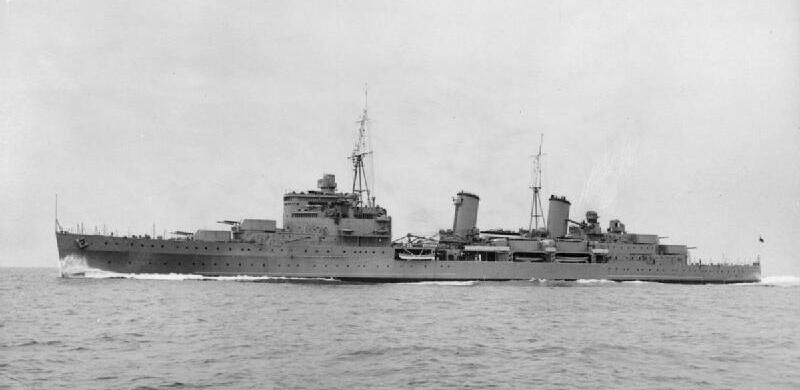
Rear Admiral Robert Burnett had been 30 miles to the north with the light cruisers HMS Sheffield and HMS Jamaica. He had been closing at full speed since the first shots. At 11:30, his two cruisers appeared out of the Arctic murk behind Hipper.
Sheffield’s 6-inch shells hit Hipper’s boiler rooms. Her speed dropped from 32 to 28 knots. Kummetz turned away.
Then one of the strangest moments of the war. The German destroyer Friedrich Eckholdt, having just finished sinking the British minesweeper HMS Bramble, spotted Sheffield in the darkness and mist. Eckholdt’s crew mistook the British cruiser for Admiral Hipper and turned to join formation.
Sheffield opened fire at point-blank range. Friedrich Eckholdt broke in two and sank with her entire crew. No survivors.
Meanwhile, Lutzow — the entire southern jaw of the German pincer — had done almost nothing. Her captain, Kapitan zur See Rudolf Stange, had the convoy in sight but refused to close the range in the poor visibility. He fired a few salvos at long range. All missed.
Every merchant ship in JW-51B reached Murmansk.
The Aftermath That Changed Everything
Here is where a skirmish in the Arctic became something much bigger.
Kummetz had imposed radio silence during the battle. The first garbled report that reached Berlin mentioned “red sky” — a reference to the Aurora Borealis. Grand Admiral Erich Raeder misread it as British ships burning. He told Hitler the Kriegsmarine had won a great victory.
Hitler announced the triumph during his New Year’s address.
On January 1, 1943, the truth arrived. Hitler learned his heavy cruiser and pocket battleship had been driven off by destroyers. Not a single merchant ship lost.
The rage lasted days.
On January 6, Hitler summoned Raeder and berated him for over two hours straight. The surface fleet was a waste of steel and money. The big ships had never accomplished anything. It was his “irrevocable decision” to scrap every capital ship in the Kriegsmarine and redistribute the men and guns to shore batteries.
Raeder resigned on January 30. His replacement was Admiral Karl Donitz, the U-boat commander. Donitz quietly talked Hitler down from actually scrapping the fleet, but the surface navy never recovered its standing. Resources poured into submarines instead.
Six British destroyers, outgunned in every category, had changed the entire strategic direction of the German navy.
Captain Robert Sherbrooke received the Victoria Cross. He lost the eye permanently but returned to service and eventually retired as a Rear Admiral in 1954. He died in 1972 in Oxton, Nottinghamshire.
Sources
- Battle of the Barents Sea - Wikipedia
- Robert Sherbrooke - Wikipedia
- Resignation and post-war life of Erich Raeder - Wikipedia
- HMS Achates (H12) - Wikipedia
- The Battle of the Barents Sea - Defense Media Network
- The Battle of the Barents Sea - WW2 Today
Photo credit: German cruiser Admiral Hipper off Norway, 1942 — Wikimedia Commons / Bundesarchiv, Public Domain