In 1991, an aircraft carrier sat 68 percent finished in a shipyard in Nikolayev, Ukraine. The Soviet Union had just ceased to exist. The workers had stopped coming. Nobody was paying for anything.
The ship had been launched on November 25, 1988 under the name Riga. Two years later, still incomplete, she was renamed Varyag. The Soviets classified her as a “heavy aircraft-carrying cruiser,” not a carrier. This was deliberate. The Montreux Convention restricts aircraft carriers from transiting the Turkish Straits. Call it a cruiser, and it can pass through. Call it a carrier, and Turkey can block it.
Ukraine inherited the hull but couldn’t afford to finish it. Completion would have cost $500 million. Ukraine’s entire military budget was a fraction of that. Varyag sat at the pier for seven years.
The basketball player
In 1996, General Ji Shengde, head of Chinese military intelligence, had a problem. China wanted an aircraft carrier. Buying one openly would cause an international incident. Ji needed a front man.
He picked Xu Zengping. Xu was a former PLA basketball player who had left the military and become a businessman in Hong Kong, organizing international sporting events. He had no experience in shipbuilding, naval architecture, or casinos.
Ji asked him to buy the carrier as a private citizen. The cover story: a floating casino and hotel, to be moored in Macau. Macau authorities had already warned Chong Lot that its harbor was too shallow to berth an aircraft carrier. The casino was physically impossible before the deal was even signed.
Fifty bottles of baijiu
In 1998, Xu registered a company called Chong Lot Travel Agency Ltd in Macau. The company had no listed telephone number, was not located at its registered address, and was run by people with Chinese naval backgrounds. Western intelligence agencies noticed immediately. Macau authorities denied Chong Lot’s gaming license application.
Xu flew to Kyiv to negotiate the purchase. The talks lasted four days. Fifty bottles of 124-proof baijiu were consumed. Bribes were paid. On the fourth day, Xu reached an agreement: $20 million for the hull.
Ukraine had one condition: any equipment with military value would be stripped before handover. Media reports called Varyag a “rusted hunk of junk” with no engines. Xu later said all four original engines were intact, preserved under grease seals.
Before the ship left Ukraine, Xu loaded 40 tonnes of carrier design documents into eight trucks and shipped them to China. Blueprints, engineering specifications, construction records, carrier deck simulator plans, and training syllabi for carrier-based flight crews. Forty tonnes of paper is roughly 8 million pages.
Turkey said no
Getting the ship out of the Black Sea required passing through the Bosphorus. Turkey refused. The Montreux Convention gave Turkey the authority to block vessels it considered unsafe, and Varyag had no rudder and no crew. She was a dead hull.
The irony: the Soviets had classified Varyag as a “cruiser” specifically to get her through the Turkish Straits. Now she couldn’t get through anyway.
China spent three years negotiating. Diplomats worked up to the level of the Chinese Prime Minister. Beijing promised to boost trade and tourism with Ankara. While the talks dragged on, Xu paid Ukraine $272,000 a month in mooring fees. Eighteen months of that.
Turkey eventually agreed, on conditions: a 12-ship convoy of tugs and pilot boats, a 240-ton bollard-pull tug as a brake on the stern, and insurance against damage to the shoreline.
On November 1, 2001, Varyag passed through the Bosphorus. Warning sirens cleared all sea traffic. The 300-meter hull slid past Ottoman palaces and mosques in six hours.
Force 10
Two days later, near the Greek island of Skyros, a force 10 gale hit. The tow lines snapped. An aircraft carrier hull was drifting free toward the island of Euboea with no engines and no steering.
Greek coast guard vessels scrambled. They recovered the tow crew. One Dutch sailor fell while trying to reattach the lines. He drowned.
Tugs eventually reattached and pulled Varyag to Piraeus. Then Egypt refused to let her through the Suez Canal. No dead ships in the canal.
Around Africa
The only route left was around the entire continent of Africa.
Strait of Gibraltar. Down the Atlantic. Las Palmas for fuel. Around the Cape of Good Hope. Up the Mozambique Channel with a stop in Maputo. Across the Indian Ocean. Through the Strait of Malacca. Into the South China Sea.
15,200 nautical miles at six knots. $8,500 a day in towing costs. Sixteen months on the water.
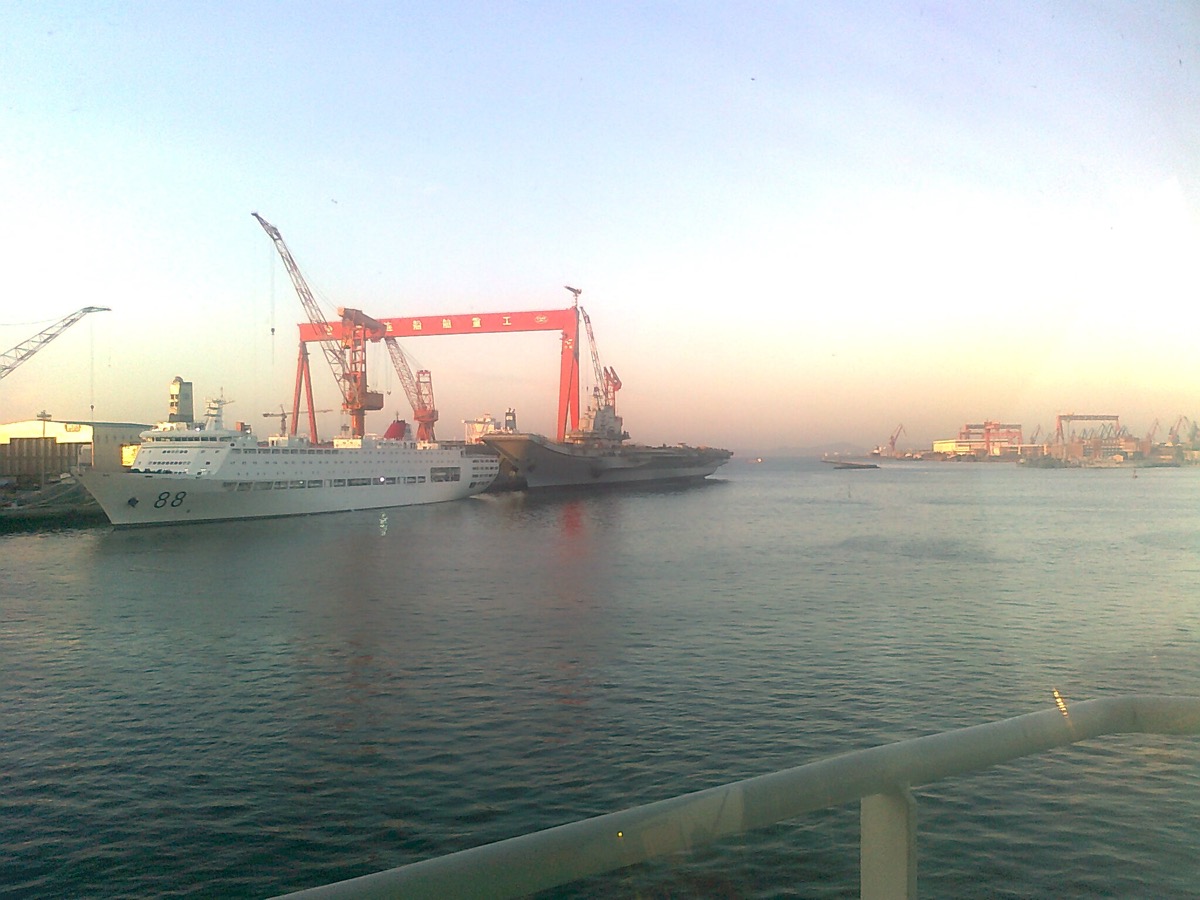
On March 3, 2002, Varyag arrived at Dalian in northeastern China. Nobody mentioned the casino again.
Nine years
Dalian Shipbuilding Industry Company spent nine years rebuilding the hull into a working carrier. New engines, new electronics, new weapons systems, a rebuilt flight deck, aircraft arrestor gear, and a ski-jump bow for launching J-15 fighters. The 40 tonnes of blueprints Xu had trucked out of Kyiv made this possible. Without them, China would have been reverse-engineering a stripped hull with no documentation.
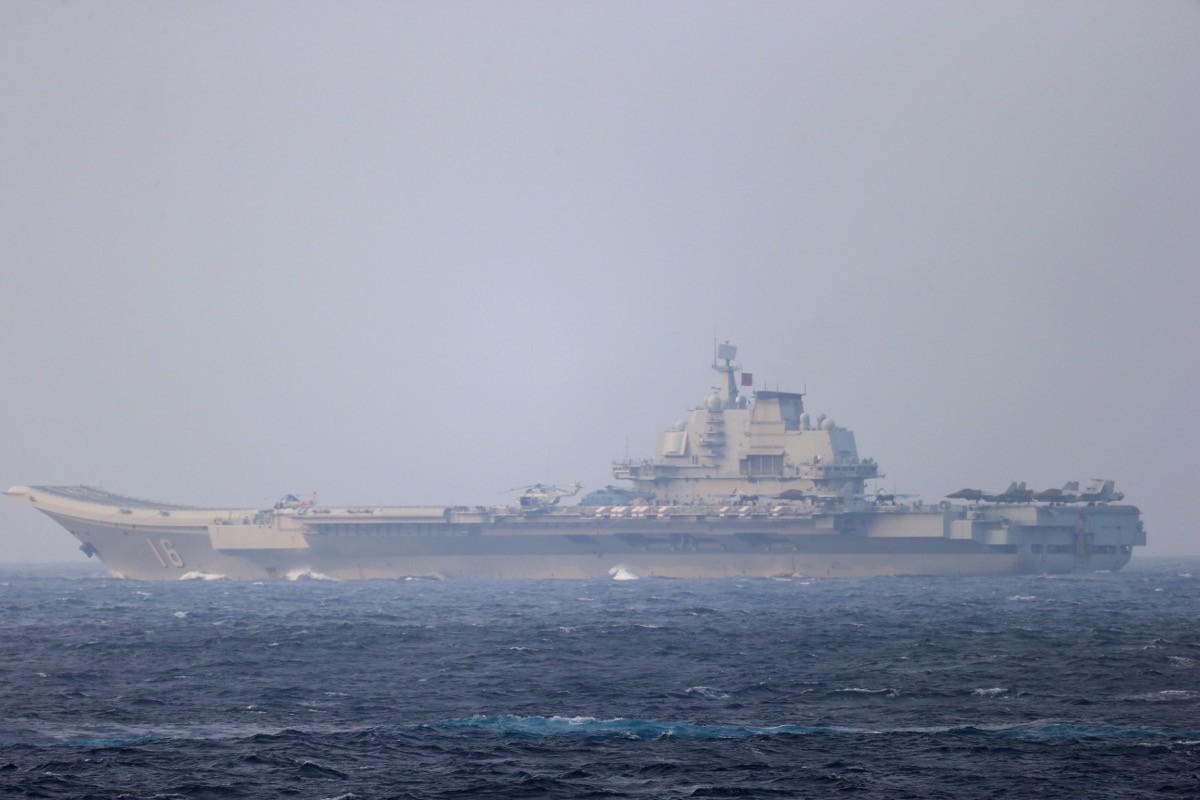
Sea trials began in August 2011. On September 25, 2012, the ship was commissioned into the People’s Liberation Army Navy as Liaoning, hull number 16. China’s first aircraft carrier.
No receipts
Xu Zengping estimated his total cost at $120 million. The $20 million purchase price was the small part. Towing, port fees, insurance, storage, mooring fees, legal costs, sixteen months of tug bills, and bribes added up.
General Ji, the intelligence chief who had recruited Xu, was arrested in 2001 for running a smuggling ring in Xiamen. He went to prison. The military officers who organized the purchase were gone. Nobody in Beijing would take Xu’s calls.
Xu asked the government to reimburse him. Beijing paid the $20 million for the carrier itself. For the remaining $100 million, they said he lacked receipts.
Invoices don’t come standard with bribes paid to Ukrainian businessmen over fifty bottles of baijiu.
Xu sold his house in Hong Kong. He spent eighteen years paying off creditors. In a 2015 interview with the South China Morning Post, he said he had never been fully repaid.
The man who bought China its first aircraft carrier went broke doing it.
Three carriers
Liaoning is still in service. China used her to train pilots and develop carrier operations. The second carrier, Shandong, was commissioned in 2019, built in China but based on the Varyag hull. The third, Fujian, launched in 2022 with electromagnetic catapults and a flat deck.
All three trace back to a Macau company with no phone number, a casino license that was denied, and a harbor too shallow to dock the ship.
Sources
- Wikipedia: Chinese aircraft carrier Liaoning
- South China Morning Post: How Xu Zengping sealed the deal
- Foreign Policy: The Long, Strange Trip of China’s First Aircraft Carrier
- Forces News: The Long and Strange Tale of China’s First Aircraft Carrier
- Varyag World: Towage
- The China Story: How China Acquired Its First Aircraft Carrier